28% MORE
REVENUE.
12% MORE CUSTOMER BASE.
In 5 months, using innovative storytelling and pricing models in Tulip, a B2C social crowdfunding platform.
DISCLAIMER: I've kept the organisation name redacted as "Tulip". I genuinely don't want people messing with an ecosystem that's running thousands of active emergency fundraisers.
WHAT IS
TULIP?
Tulip is an online crowdfunding platform where people in crisis can ask for help and donors from across the world show up for them. It runs fundraisers across medical emergencies, education, and 20+ other causes. People donate, campaigns get visibility, beneficiaries receive funds - the engine already works.
1800+
Active campaigns
20
Categories
RoR + React
Tech stack
6mo
Duration
2.4M
Monthly visitors
84%
Mobile users
96%
India users
WHY THIS CASE MATTERS
Donation is such a strange behaviour if you think about it. You give away your money and expect nothing in return. No product. No service. Just faith.
In India, this behaviour is tied deeply to culture - Dana, Zakat, charity, religious duty, morality, empathy, family values. All of it mixes together and forms this unique psychology of giving.
Tulip is one of the only organisations that managed to get this right at scale in urban India. More than 96% of campaigns and donations came from Tier-1 and urban markets.
BIG AUDACIOUS GOALS
- 01
5% increase in market share
Expand into Tier 2, 3, and rural Karnataka
- 02
10% increase in revenue
Through new pricing models
- 03
Timeline: H1
Goal formalised during half year planning
NOW STATE.
When we began
The existing workflow worked beautifully for urban areas
Fundraiser User Flow
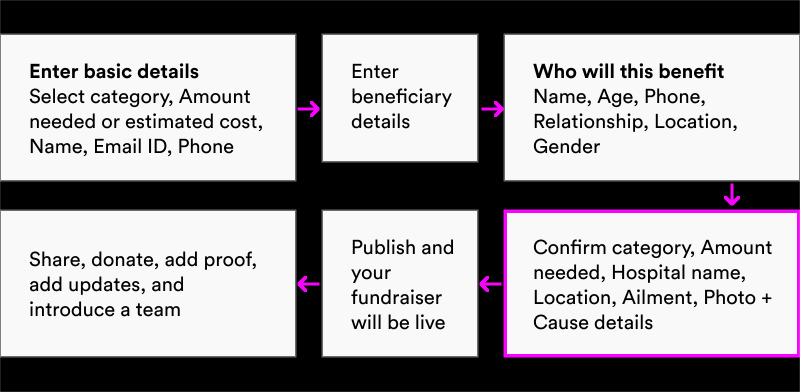
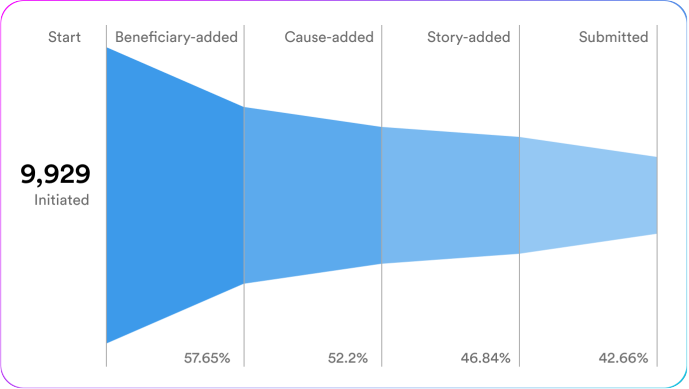
Register → setup profile → add beneficiary details → add case information → upload documents → choose promotion options → set withdrawal options
Donor User Flow
Find campaign → donate → get receipt
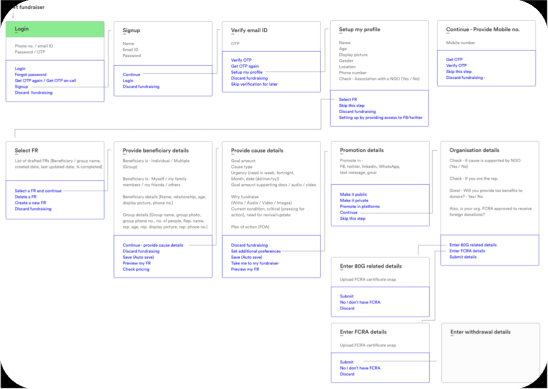
This engine produced
92%
of Tulip's entire revenue
The remaining 8% came from offline fundraising teams operating in big cities.
The question was simple but bold:
Will all this work as-is in rural markets?
Or will people behave differently?
RESEARCH STUDIES.
SCOPE
Karnataka tier 2, 3, and rural
Study location
13 core team members & off-shore supporters
Team
Mixed (Qualitative & Quantitative)
Data
Statistical & Thematic
Analysis
40 days
Duration
HYPOTHESES
"Donation behaviour in urban areas of Karnataka is more significant than rural areas"
Null hypothesis
Donation behaviour in urban and rural areas of Karnataka is same
Independent Variable
Residential
Dependent Variable
Donation behaviour
SECONDARY DATA REPORT
6.11 Cr
Study location
3.09 & 3.01 Cr
Male & female
75.36%
Literacy rate
Urban specific
With avg. literacy of 85.78%, about 38.67% people live in Bangalore, Mysuru, Mangalore, Hubballi-Dharwad, Belagavi, Gulbarga, Bidar, and Bellary.
Rural specific
With avg. literacy of 68.73%, about 61.33% people live in Hassan, Shivamogga, Davangere, Chitradurga, Tumkuru, Raichur, Bagalkot, Koppal, Gadag, and Kodagu.
SPEAR FRAMEWORK
Set objective, Prepare, Execute, Analyse, and Report
S - Set Objective
Understand why people donate – motivations, frustrations, emotional triggers. Compare differences between urban and rural donors.
Understand how social, cultural, demographic, and economic factors affect donation behaviour. Build hypotheses and segment markets.
Build a geographical + behavioural segmentation strategy, TAM sizing, GTM outline, and service touchpoints adapted for Karnataka's tier 2/3/rural markets.
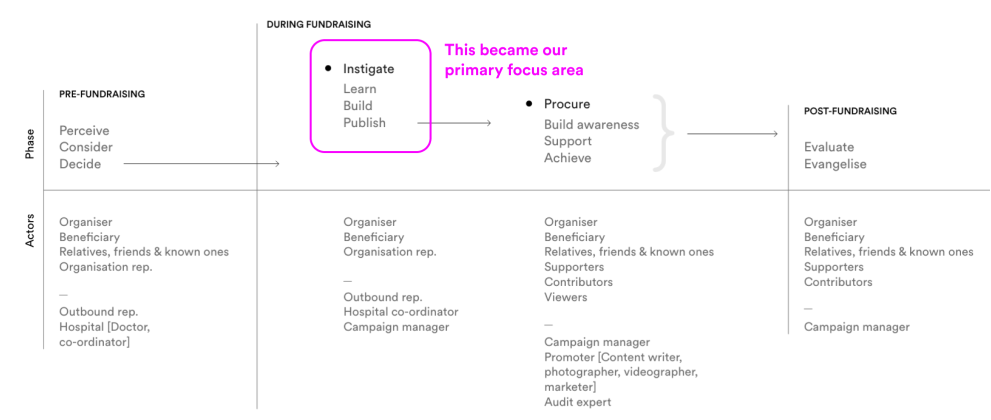
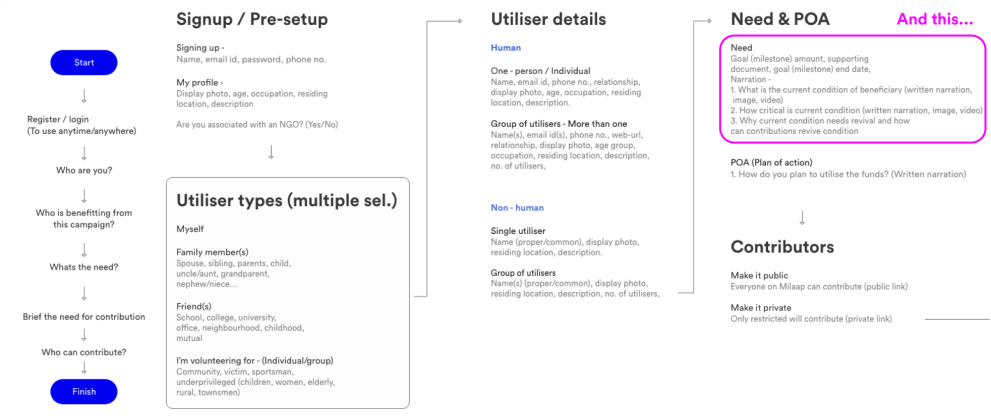
WHAT THESE INSIGHTS TRIGGERED INTERNALLY...
This is the part I love the most - the empathy shift...
The entire product, design, and CX team started speaking from the user's perspective. We even started referring to personas with names like "Arun," the statistical persona representative.
A new user journey began to emerge.
THE MVP THAT CHANGED THE GAME
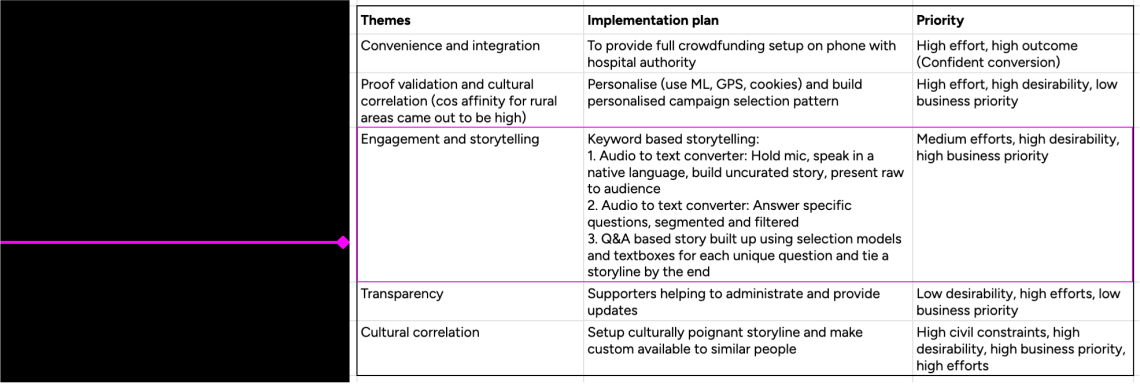
QAS. Q&A Based Storytelling
Came out of 3 signals:
Audio-to-text converters didn't work well for most people.
Story writing felt emotionally heavy and intimidating.
Rural audiences responded strongly to "guided narration".
THIS IS HOW WE BUILT IT...
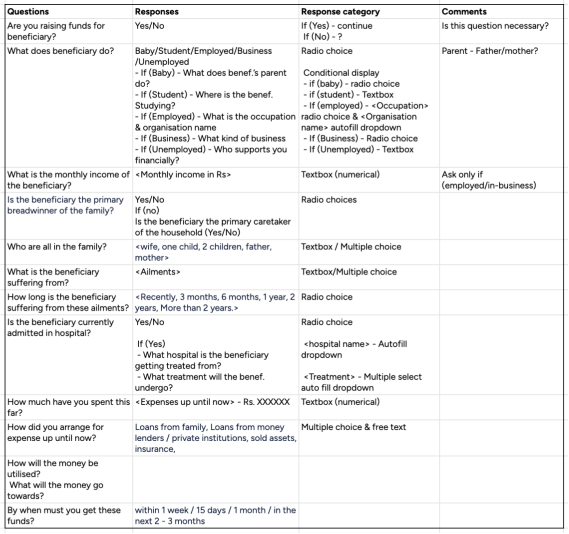
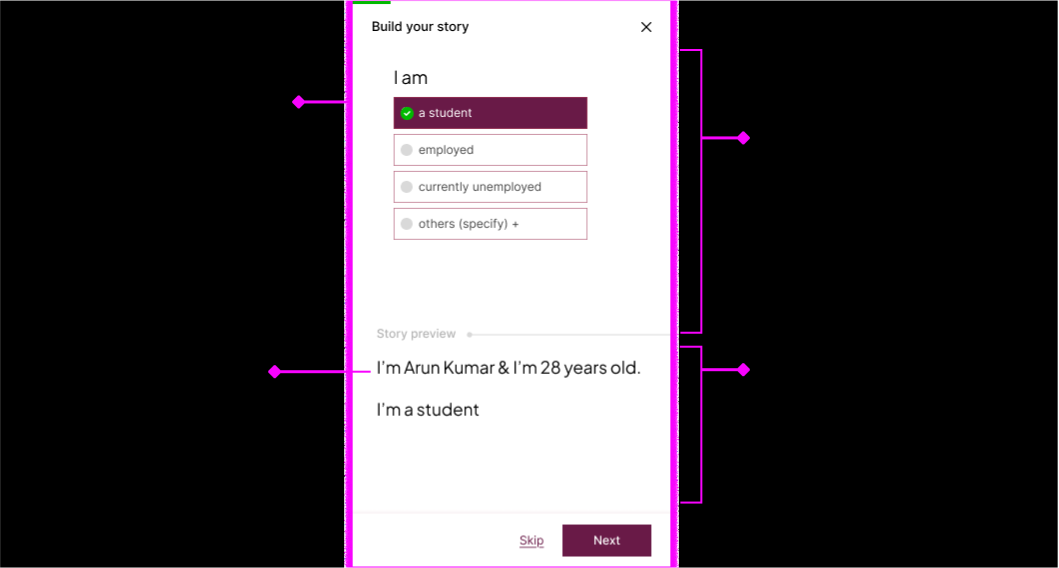
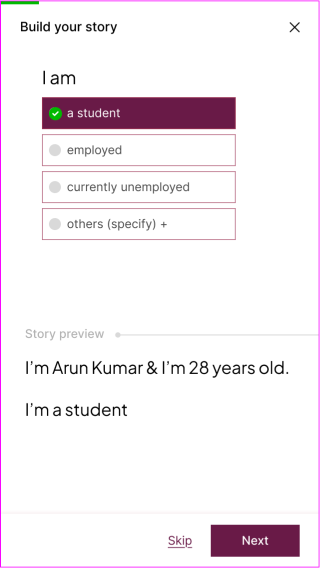
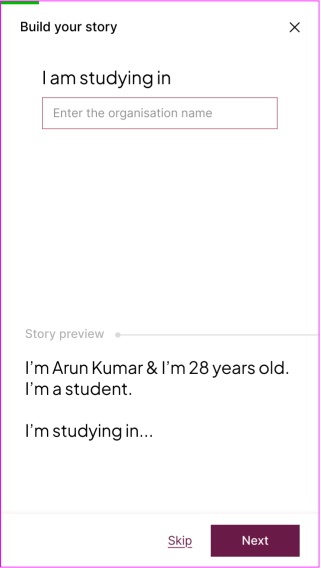
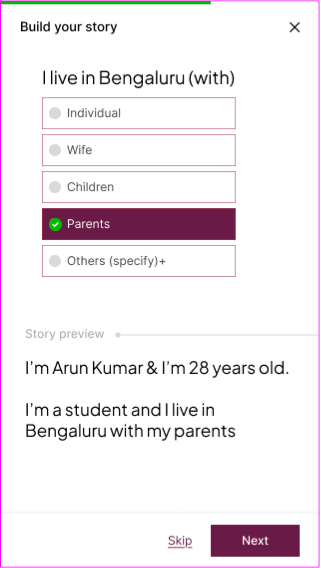
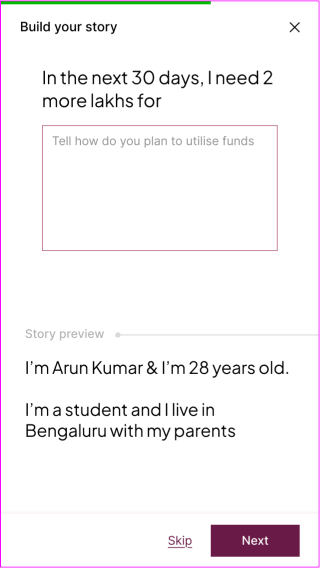
We built an interface where fundraisers answer a series of questions.
The system ties the answers into a coherent narrative automatically.

I'm Arun Kumar (Ask in the story), raising funds for my Father (From step 1) who is a retired Canara bank employee (Ask in the story)
He makes his livelihood with a pension of Rs. 2,900.00 (Ask in the story) & is the primary caretaker (Ask in the story) of the family
The 5 (Ask in the story) of us live as a family in shimogga (From step 1)
My father has been suffering from Lung cancer (From step 2) for more than 2 years (Ask in the story). He is undergoing chemotherapy (Ask in the story) in Apollo hospital Bangalore (From step 2). Up until now, we've spent more than 2 Lakhs (Ask in the story) - assisted from savings & loans from family & friends. (Ask in the story)
To continue his treatment we need 2,00,000.00 (From Step 2) more in the next 15 days (From step 2). Please help us
WHAT HAPPENED AFTER LAUNCH.
| Month | Submitted | Converted | Raised |
|---|---|---|---|
| Oct | 789 | 65.09% | 23763837 |
| Nov | 2300 | 76.64% | 63723823 |
| Dec | 1301 | 64.69% | 47328723 |
| Jan | 3212 | 86.69% | 73623763 |
| Total | 7602 | 73.27% | 208440146 |
IN 4 MONTHS.
increase in total fundraisers
Rural areas contributed up to 19% of these
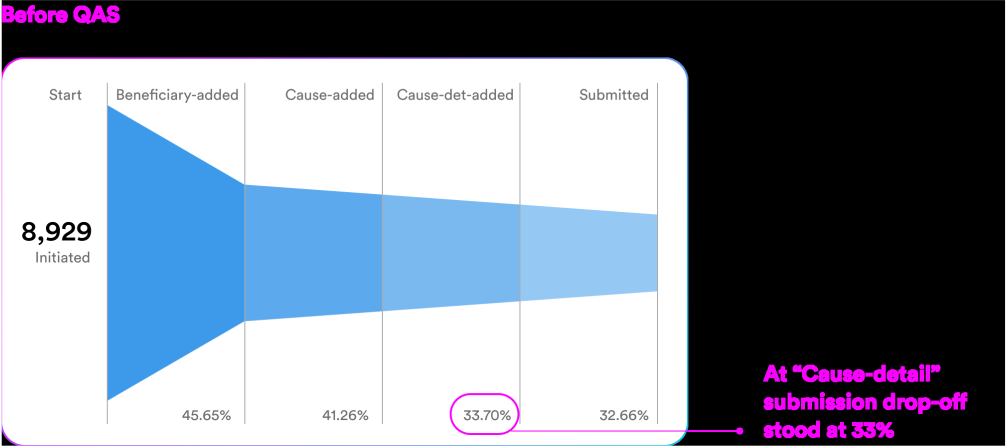
drop-off rate
Reduced from 33%
revenue jump
Combined with tipping model
This happened: Tulip stopped charging fundraisers → With better stories → more trust → more donations → more tips
LEARNINGS.
Rural markets don't need "lite versions" - they need culturally resonant versions
Storytelling is not a writing problem, it's a structure problem.
Behaviour > demographics when it comes to product expansion
Cross-functional empathy accelerates innovation more than individual creativity.
Great revenue outcomes often hide behind human-centric problem-solving.
WANT TO DISCUSS THIS CASE STUDY?
Let's talk about how strategic design can transform your business metrics.